

Egyptian National Observatory For Women
Data is being prepared for your service...
Please wait while we prepare the insights and reports
Preparing......
Vision 2030POWERED BY BASEERA
Please wait while we prepare the insights and reports
POWERED BY BASEERA
Explore the latest reports and publications related to Egyptian women's empowerment.
 Baseera
The National strategy for women empowerment that has been launched by the National Council for Women in 2017 aims at increasing women’s presence in leadership positions. One of the challenges addressed by the strategy is the culture, values and perceptions about women’s capabilities to act as a business and political leader. This paper sheds light on the perceptions of Egyptian regarding appointing women in leadership positions in government and in private sector, and presents a set of recommendations to improve women representation in the high level management in these sectors.
 Baseera
The latest update of the Egypt National Observatory for Women shows some improvements over the last 5 years in women’s economic participation and employment, women’s financial inclusion, and political participation. However, this participation is still limited and achieving more improvements needs a social consensus about women rights and the importance of supporting women to have access and practice these rights. This paper aims at exploring the perceptions of Egyptians regarding women economic rights. This includes rights to work, rights to establish private enterprises, rights to make decisions regarding using her income, rights to have her own bank accounts and inheritance rights.
 Baseera
National Council for Women launched the national strategy for women empowerment in 2017. One of the strategy pillars was women social empowerment that focused on women health and education. The 4th pillar of the strategy, women protection, focused on protecting women from early marriage, FGM and all types of violence against women. The strategy aims to decrease the maternal mortality ratio, increase women’s life expectancy, eliminating early marriage and FGM. Society culture, values and preferences and the available services are the most factors that affect women’s health and reproductive health. The objective of this paper is to explore women rating for the health and reproductive health services they get and the values that control their attitudes towards a set of reproductive health issues.
 Baseera
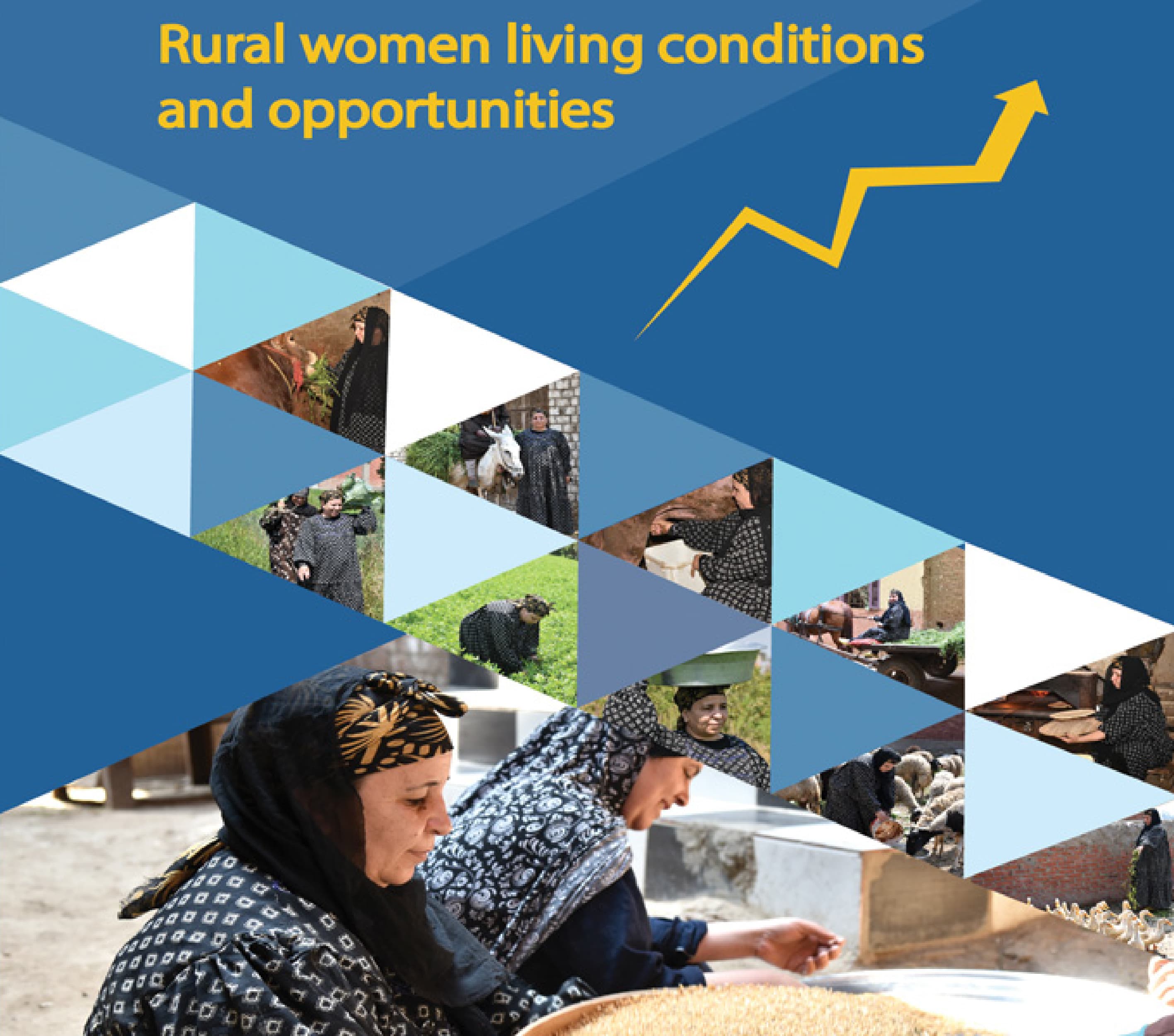
Rural women play an important role in achieving sustainable development as they are key agents in economic, environmental and social changes in developed and developing countries, accordingly, the United Nations declared the 15th of October to be the international day for rural women in 2008. Rural women have essential role in food security as they are active in crop production, livestock care, and provision of food, water and fuel for their families and engage in off-farm activities in addition to their role in house care for children and old people. Quality of life, education and training, economic participation opportunities, financial inclusion opportunities, and familiarity with technology affect the capabilities of rural women to act as change agents and lead the development in their local communities. This paper aims at exploring the status of the above mentioned factors among rural women.
 Baseera
Women’s economic empowerment and her participation in labor force have significant positive impact on the children’s health and education and on the growth of the whole economy. Education is considered as a major determinant of female’s economic participation. However, it was observed that women’s achievement in education was not translated into higher female labor force participation. In Egypt, the female labor force participation is among the lowest worldwide with only 22 percent. Moreover, when employed, women are more likely to be in low-earning job with poor conditions and limited opportunities for career advancement and vulnerability to sexual harassment and different types of violence. Women present human capital potential in Egypt; closing gender gap and increasing women’s access to economic opportunities are highly needed for increasing growth, decreasing poverty and achieving sustainable development goals.
 Baseera
The National Strategy for the Empowerment of Egyptian Women 2030 included four pillars: Political empowerment, economic empowerment, social empowerment, and protection. The strategy aims at increasing women’s agency so that they can make informed choices, as well as addressing discriminatory practices and cultural stereotypes that harm women and are obstacles to their effective economic participation, and empowerment. Enhancing women’s economic participation is seen as contributing to GDP growth, and to realizing the goals of the economic pillar of Egypt’s Vision 2030. The strategy’s aim is to achieve women’s economic empowerment through capacity development, equal employment opportunities in all areas, including the private sector, entrepreneurship, and key posts in public entities and companies. The strategy adopts a set of interventions including “ensuring women’s access to information and communications technology.”
 Baseera
The Women Economic Empowerment report outlines the factors contributing to the persistently low economic participation of Egyptian women and to identify “gender smart” policies and solutions to boost economic growth while at the same time, narrowing relevant gender gaps. The study provides the context of women’s share of the public space as reflected in their access to education, health, social protection, and decent work opportunities. It provides qualitative insights into women’s perceptions regarding working conditions and challenges, including the reconciliation between work and marriage, and the relation between household responsibilities, earnings, and the dynamics of decision making in the household.
 Baseera
 Baseera
The Global Gender Gap (GGG) index is an annual index published by the World Economic Forum to measure the gap between males and females in four aspects: economic participation and opportunities, educational attainment, health and survival, and political empowerment. This report present simulation results for Global Gender Gap Index based on the current situation in addition to some hypothetical scenarios for changes in the sub-indices.