
Egyptian National Observatory For Women
Data is being prepared for your service...
Please wait while we prepare the insights and reports
Preparing......
Vision 2030POWERED BY BASEERA
Please wait while we prepare the insights and reports
POWERED BY BASEERA

An independent mechanism launched in 2017 to monitor the National Strategy for Egyptian Women 2030, ensuring transparency and impartiality in development efforts.
The national duty and responsibility before history necessitate that we accelerate the pace of women's empowerment, preserving their rights and placing them in the position that befits their value, capabilities, and sacrifices throughout history, in commitment to the Egyptian Constitution which expresses the will of the Egyptian people and has established the values of justice and equality, and in implementation of the principles of equal opportunities and the rights it has guaranteed for women, and in line with Egypt's Vision 2030 and its sustainable development strategy that seeks to build a just society, ensuring equal rights and opportunities for its sons and daughters for the highest levels of social integration for all groups, and out of the Egyptian state's belief that stability and progress will only be achieved through ensuring effective participation of women in all aspects of national work.

Baseera CEO

President of the National Council for Women

Senior Social Protection Specialist at the World Bank
Collecting indicator values and displaying them on an interactive website.
Preparing periodic reports on the status of Egyptian women and the gender gap.
Compiling and displaying laws related to women.
Implementing Entity

Supporting Organizations
National Council for Women
World Bank Group
UN Women

European Union

United Nations Population Fund

Sawiris Foundation
National Council for Women
World Bank Group
UN Women
European Union
United Nations Population Fund
Sawiris Foundation
 Baseera
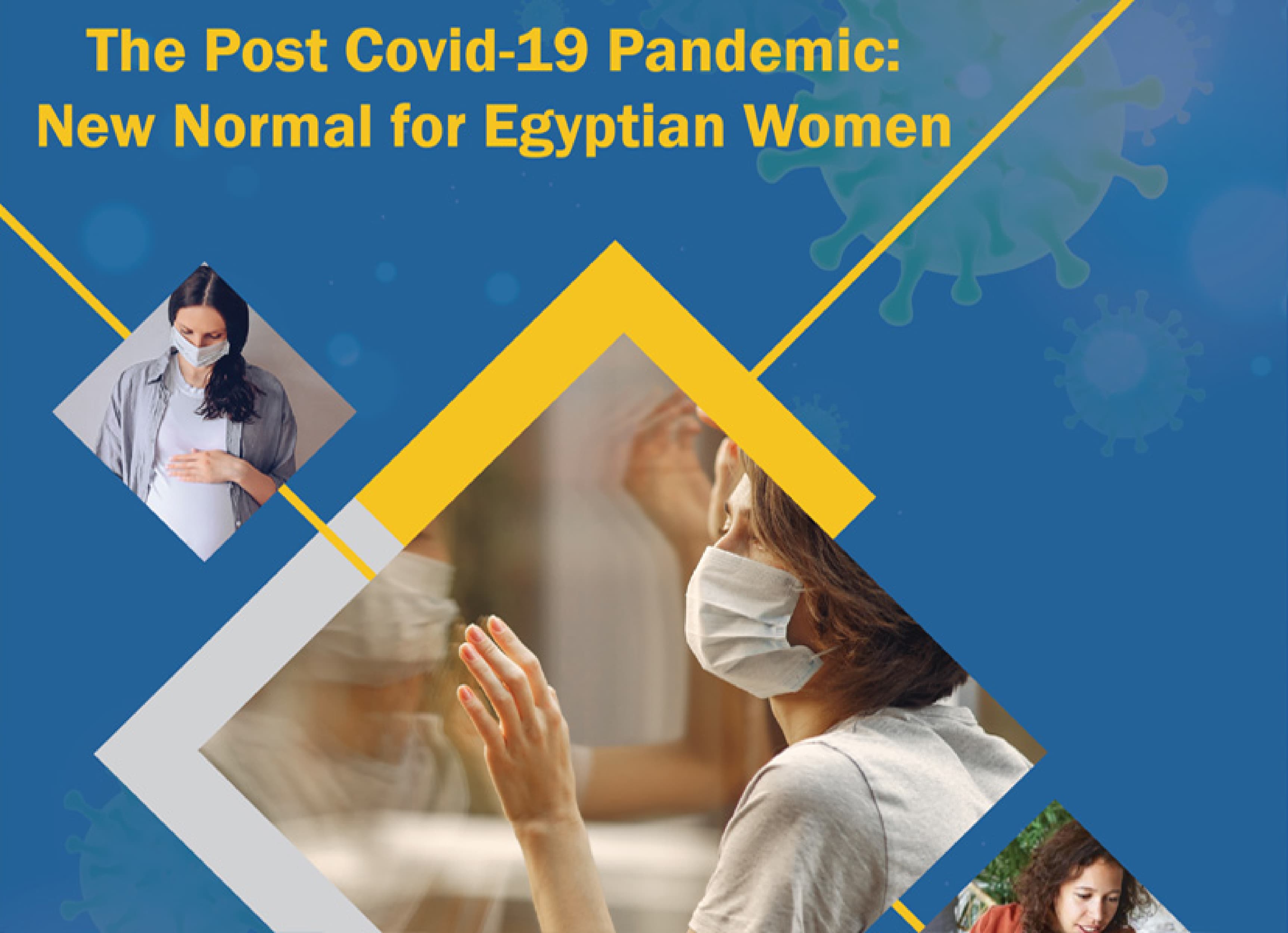
The economic empowerment of women is a main pillar of the Egypt National Strategy for Women’s Empowerment 20301, which sets out several mechanisms to achieve this goal. These include a) expanding employment options; b) increasing Female Labour Force Participation (FLFP); c) providing equal opportunities in all sectors (including entrepreneurship and the private sector); and d) assumption of key positions by women in both public sector and private entities. Concurrently, the strategy aims to guarantee opportunities for greater social participation of women, expand capacities of choice, and work towards the eradication of practices that are discriminative and harmful against women within the family and in the public sphere. This paper aims to envision the future of economic empowerment of Egyptian women in light of the COVID-19 pandemic.
 Baseera
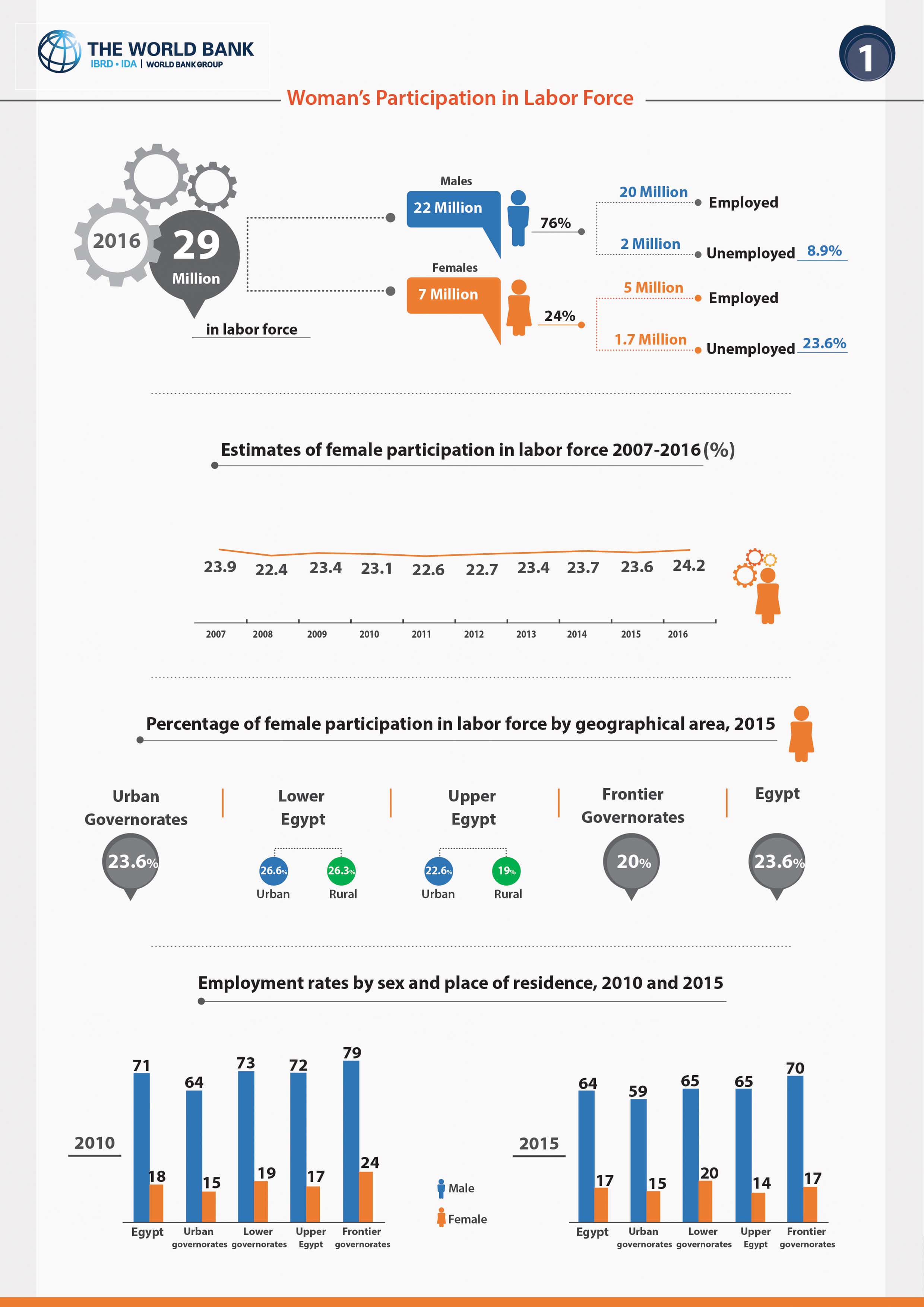
Women’s economic empowerment and her participation in labor force have significant positive impact on the children’s health and education and on the growth of the whole economy. Education is considered as a major determinant of female’s economic participation. However, it was observed that women’s achievement in education was not translated into higher female labor force participation. In Egypt, the female labor force participation is among the lowest worldwide with only 22 percent. Moreover, when employed, women are more likely to be in low-earning job with poor conditions and limited opportunities for career advancement and vulnerability to sexual harassment and different types of violence. Women present human capital potential in Egypt; closing gender gap and increasing women’s access to economic opportunities are highly needed for increasing growth, decreasing poverty and achieving sustainable development goals.
 Baseera
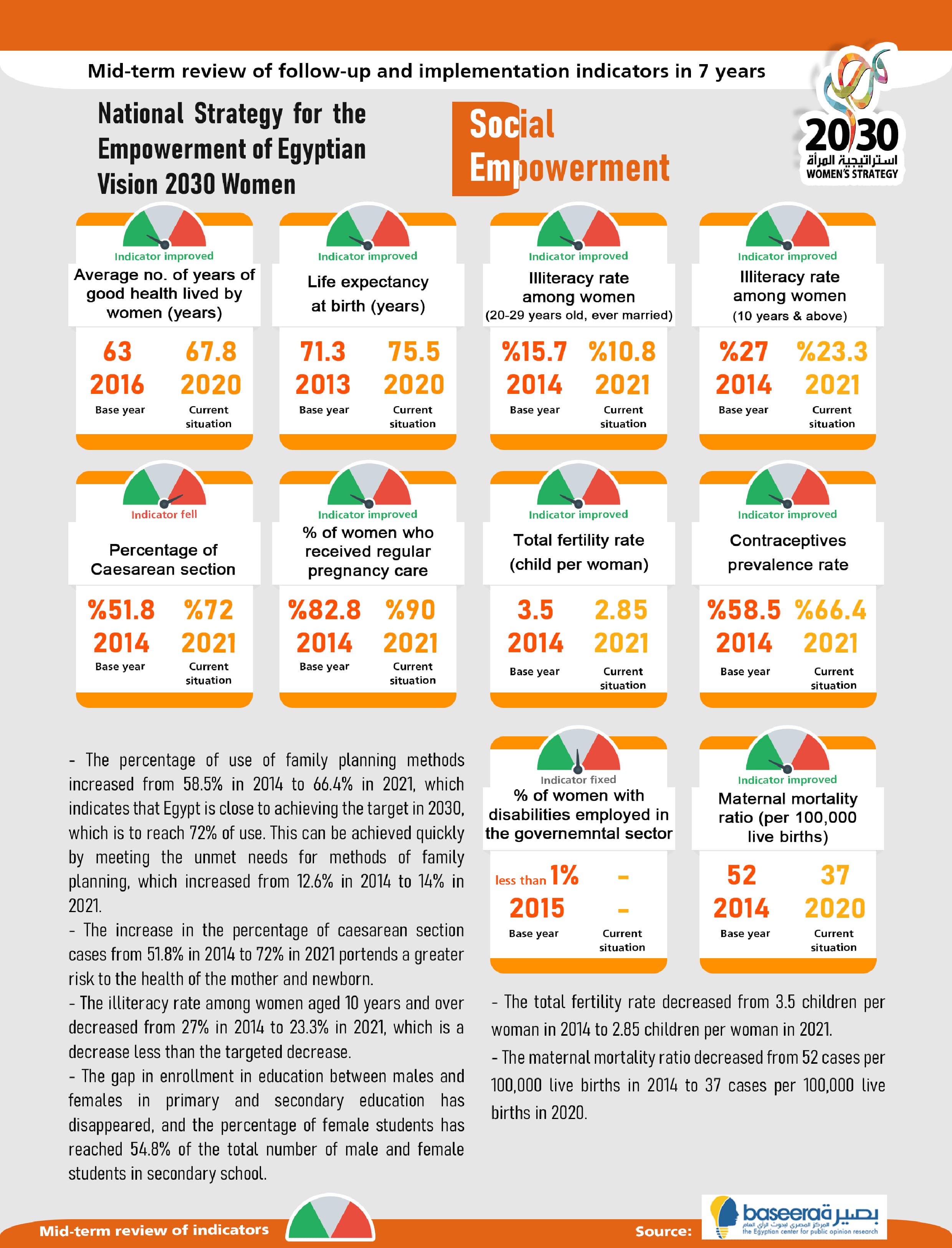
The latest update of the Egypt National Observatory for Women shows some improvements over the last 5 years in women’s economic participation and employment, women’s financial inclusion, and political participation. However, this participation is still limited and achieving more improvements needs a social consensus about women rights and the importance of supporting women to have access and practice these rights. This paper aims at exploring the perceptions of Egyptians regarding women economic rights. This includes rights to work, rights to establish private enterprises, rights to make decisions regarding using her income, rights to have her own bank accounts and inheritance rights.